
When Should Mercedes-Benz Brake Pads Be Replaced?
Maintenance · Published 2026-08-05 · Updated 2026-08-28 · By the Barat German Auto workshop team
What the wear sensor really tells you, and the signs worth acting on before the warning light appears.
What the brake wear warning actually measures
Mercedes-Benz uses a wear sensor embedded in the pad that completes a circuit when the friction material has worn down to a set thickness. It is a late warning, not an early one, and it usually monitors only one wheel per axle. Pads on the other side may be in a different condition, which is why measurement beats relying on the dashboard.
Signs worth acting on before the light
A high-pitched squeal on light braking, a longer pedal travel than you remember, brake dust building up unusually quickly on one wheel, or the car pulling slightly to one side under braking. Any grinding sound means the friction material is gone and the backing plate is cutting into the disc, which turns a pad job into a pad and disc job.
Why discs matter as much as pads
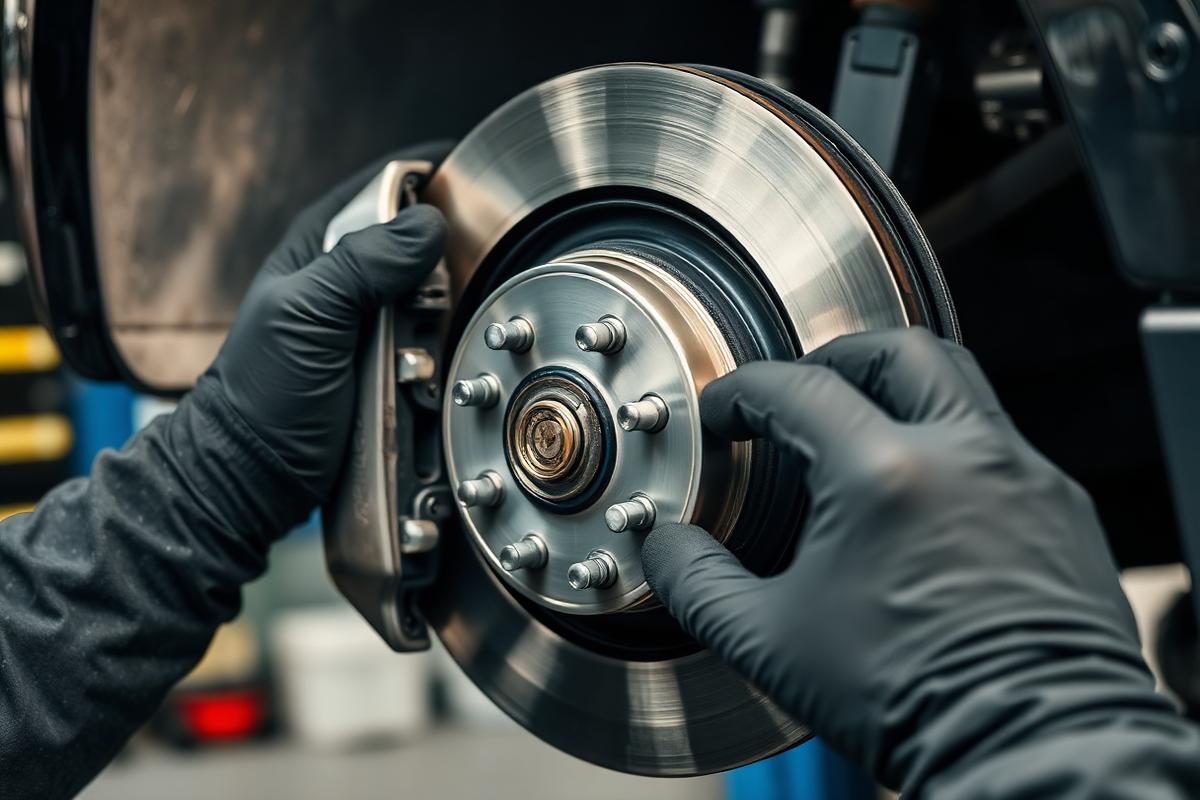
Discs have a minimum thickness stamped on them. Fitting new pads onto discs that are at or below that figure gives poor pedal feel, accelerates the new pads' wear and increases the risk of heat-related warping. We measure disc thickness and run-out and show you the readings, so the decision is based on numbers rather than opinion.
Brake fluid is part of the picture
Brake fluid absorbs moisture over time, which lowers its boiling point. Boiled fluid produces vapour in the lines and a pedal that goes soft under sustained braking, precisely when descending a long hill fully loaded. Most German manufacturers specify a two-year change interval, and we test moisture content rather than guessing.
The electronic parking brake
Many later Mercedes-Benz models require the electronic parking brake to be retracted with a diagnostic tool before the rear pads can be removed, and reset afterwards. Doing this without the tool risks damaging the caliper motor. It is one of the reasons rear pad replacement on a modern Mercedes-Benz is not a driveway job.
Need help with this at our Polokwane workshop?
We handle this work every week at 23 Sixth Street, Industrial, Polokwane, 0700. Phone 078 956 2244 or book online and we will diagnose it properly before quoting.
Related services
More from the workshop
Questions About This Topic
Typically 30 000 to 60 000 km depending on driving style and conditions. Fronts wear faster than rears on most models.
Only if the discs measure above the minimum and are not scored or warped. We measure and show you before recommending either route.